FAKE QUOTE FALSELY ATTRIBUTED TO SOLZHENITSYN

A malicious, entirely fake quote attributed to Solzhenitsyn has been making the rounds of the internet. Some versions are longer, some are shorter, but all are entirely fake, whether or not the people posting and re-posting them are aware of this. Here it is:

You must understand. The leading Bolsheviks who took over Russia were not Russians. They hated Russians! They hated Christians! Driven by ethnic hatred they tortured & slaughtered millions of Russians without a shred of human remorse. The October Revolution was not what you call in America the ‘Russian Revolution’. It was an invasion & conquest over the Russian people. More of my countrymen suffered horrific crimes at the blood-stained hands than any people, or nation ever suffered in the entirety of human history. It cannot be understated! Bolshevism was the greatest human slaughter of all time. The fact that most of the world is ignorant of this reality is proof that the global media itself is in the hands of the perpetrators. We cannot state that all Jews are Bolsheviks, but without Jews there would have been no Bolshevism. For a Jew, nothing is more insulting than the truth. The blood-maddened Jewish terrorists murdered 66 million in Russia from 1918 to 1957.

We challenge anyone to demonstrate where, exactly, Solzhenitsyn purportedly writes any of this; please indicate work title, chapter name, and page number. Knock yourselves out, but you will never be able to—because this passage does not exist in his writings. What makes a fake like this especially damaging is that it takes elements of Solzhenitsyn’s thought and re-packages them in a veneer of plausibility. (After all, Solzhenitsyn WAS an implacable enemy of Bolshevism, right?… And he DID mention the figure of 66 million casualties in his Gulag Archipelago?…) But not a single phrase in this fake is an actual quote, nor is the overall idea faithful in the least to Solzhenitsyn’s worldview. And most reprehensible of all is the attribution to Solzhenitsyn of the tired anti-Semitic canard that it was “the Jews” who were responsible for the Russian Revolution. Without minimizing Jewish involvement in the Revolution, Solzhenitsyn, in Two Hundred Years Together, nonetheless sums up his overall conclusion about that complex topic with words that unambiguously contradict the fake quote:

During my many years of in-depth work on the February Revolution it fell to me to make out its essence and understand the role played in it by Jews. I have concluded for myself, and can reiterate now, that, no, the February Revolution was not something the Jews did to the Russians—it was undoubtedly the handiwork of Russians themselves, as I believe I have amply demonstrated in The Red Wheel.
— Solzhenitsyn, Two Hundred Years Together, chapter 13

Please help spread the word by making your voice heard anywhere you see this fake, or ones like it, and feel free to refer back to this post.

"Two Hundred Years Together" to be published in English

We are pleased to announce that Aleksandr Solzhenitsyn’s Two Hundred Years Together, a two-volume history of the Jewish people in Russia in a complete, unadulterated, authorized translation from the Russian, is slated to be published by Creed and Culture in Spring 2028. The translator is Leo Shtutin, known for his translations of Mikhail Shishkin, Victor Beilis, and Solzhenitsyn’s Essays on Russian Literature (due out in 2027). This new edition will be furnished with a comprehensive, authoritative introduction by Prof. Daniel J. Mahoney, which will highlight the key themes of this long-awaited book. For more information, see the publisher’s website and our own book page here. Meanwhile, please note that all English versions currently available on the Internet or in print are illegal, pirated, in violation of international copyright law, and entirely unauthorized. Such bowdlerized “translations” do not accurately reflect what Solzhenitsyn wrote; rather, they reflect the prejudices of those who made them.

Two Hundred Years Together begins at the first significant appearance of Jews in the Russian Empire in the late eighteenth century, continues through the turmoil of the Russian Revolution, and ends at the present day. The book grew out of The Red Wheel, Solzhenitsyn’s monumental opus on the Russian Revolution. As the author himself explains in chapter 13 of Two Hundred Years Together, in The Red Wheel he had shown the Revolution in its full complexity; and indeed—to avoid boiling down that complexity or skewing it via the narrow prism of the so-called “Jewish question”—he gave The Red Wheel priority of publication in every major language, ahead of Two Hundred Years Together. Now that the English publication of The Red Wheel is at last nearly complete, Anglophone readers will be able to place both works in their proper historical context.

In Two Hundred Years Together, while engaging on the economic, political, cultural, and religious level with the Jewish role in Russian history, including the Revolution, Solzhenitsyn emphatically denies (in chapters 9 and 14) that Revolution was the result of a “Jewish conspiracy” (just as he had earlier forcefully criticized the extreme Russian nationalists who were obsessed with Freemasons and Jews—see, e.g., Russia in Collapse, chapter 25, “The Maladies of Russian Nationalism”).

Let Solzhenitsyn himself have the final word (from the preamble to Part One):

I have never recognized anyone’s right to conceal that which was. Nor can I advocate an accord founded on an unjust portrayal of the past. I call for patient mutual understanding from both parties, Russians and Jews alike, and call on both sides to recognize their own share of wrongdoing. How easy it would be, instead, to turn a blind eye and say, well, that wasn’t really us…
I have made a sincere attempt to understand both sides. To do so, I have delved into events, not polemics. I try to show, and enter into debates only in those unavoidable cases where the truth has been buried under accretions of falsehood. I dare to anticipate that this book will not be greeted by the wrath of extremists and fanatics, and will instead facilitate conciliation. And I hope to find well-meaning collocutors among Jews as well as Russians.
My ultimate aim, as I envisage it, is to identify, to the best of my ability, mutually agreeable and constructive pathways for the future development of Russian–Jewish relations.
— Solzhenitsyn, Two Hundred Years Together, preamble

Solzhenitsyn’s “Literary Collection” to be published in English

We are pleased to announce that a curated collection of twelve Solzhenitsyn essays (from the several dozen that make up his self-styled Literary Collection), translated by Leo Shtutin and edited by Richard Tempest, is slated to appear in English from Cherry Orchard Books (an imprint of Academic Studies Press) in Spring 2027 under the title Essays on Russian Literature. For more information, see the publisher’s website.

Aleksandr Solzhenitsyn was perhaps the foremost moral witness to Soviet totalitarianism, and the last great representative of the nineteenth-century Russian ethical tradition. This volume is a collection of Solzhenitsyn’s literary criticism, engaging with the Russian canon across decades and centuries, from Lermontov and Chekhov to Akhmatova and Brodsky. The creator of One Day in the Life of Ivan DenisovichCancer Ward and The Gulag Archipelago proves here that he could discern the presence of kindness or beauty in a work by an artist whose artistic practices are by and large alien to his own; or even, in his view, objectionable. Insightful, aphoristic, and occasionally provocative, these essays explore dozens of imagined worlds, crafted by some of Russia’s greatest writers and poets—and Solzhenitsyn's inimitable way of expressing himself, with lively, witty, sometimes waspish turns of phrase, is very much at the fore. 

Remembrance of the Departed

Fifteen years ago today, on 3 August 2008, Aleksandr Solzhenitsyn died at his home outside Moscow at the age of 89. In remembrance, we share with you one of his late Miniatures, Remembrance of the Departed.

REMEMBRANCE OF THE DEPARTED

It is an act bequeathed to us in deep wisdom, by men of holiness.

We come to understand its purpose not in vigorous youth, amidst the company of loved ones, family, friends; but with age.

Parents have passed; peers now pass as well. Where go they? It seems unguessable, unfathomable, beyond our grasp. Yet as with some foreordained clarity, it dawns for us, it glimmers — no, they have not vanished.

And no more shall we learn of it, while we live. But a prayer for their souls—it casts from us to them, from them to us, an impalpable arch of measureless breadth yet effortless proximity. Why, here they are, you can almost touch them. Both unknowable are they and, as ever, so familiar. Except, they have fallen back in years: some were older than we, but now are younger.

Focusing, you even inhale their answer, their hesitation, their warning. In exchange, you send them your own earthly warmth: perhaps we too can help somehow?

And a promise: we shall meet.
— translated by Stephan Solzhenitsyn

Solzhenitsyn on Ukraine

The Ukraine will be an extremely painful problem.
— Aleksandr Solzhenitsyn, 1968

Over the tragic course of the past sixteen months, we have received a number of inquiries asking us to opine on “What would Solzhenitsyn say today?” We do not presume to speculate, both because the topic is far too sombre for soundbites and because the atmosphere in Ukraine evolved so significantly during the author’s decades of experiencing and studying the Ukrainian question that we must reserve his right, were he alive today, to have expressed opinions corresponding to the situation at hand.

What remains abundantly clear, however, is the depth of emotion with which Solzhenitsyn—himself part Russian and part Ukrainian—addressed this question; the unnerving foresight with which he descried the likelihood of a perilous future; and his earnest desire, on this issue almost above all others, to influence its benevolent resolution—a hope that, amidst today’s fratricide, appears to lie in smoldering ruin.

With this in mind, we offer you our readers, on this new page of our site, a compendium of excerpts from Solzhenitsyn’s writings about Ukraine, from as far back as 1968 and until 2006, and invite you to read and re-read Solzhenitsyn’s prophetic words of anguish and warning.

Solzhenitsyn Reading Group at Harvard

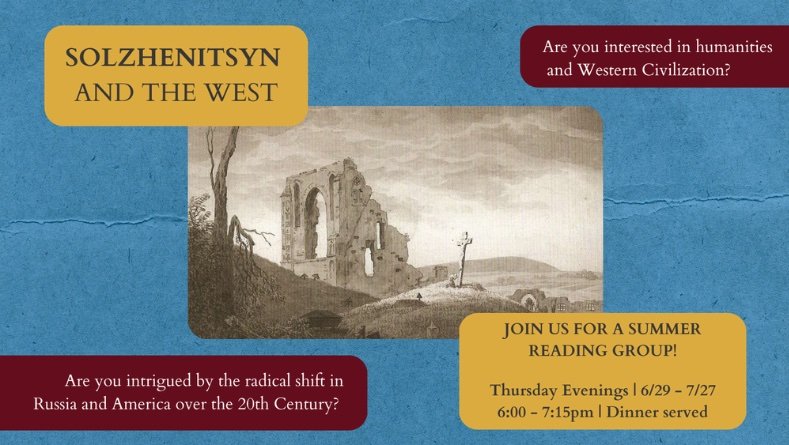
Harvard’s Abigail Adams Institute has announced a Solzhenitsyn summer reading group, to focus on five of the author’s most probing speeches and essays.

I cannot think of any more worthwhile study for any student on any campus today than to go carefully through all the writings and discourses of Aleksandr Solzhenitsyn.
— Malcolm Muggeridge

Update on The Red Wheel in English

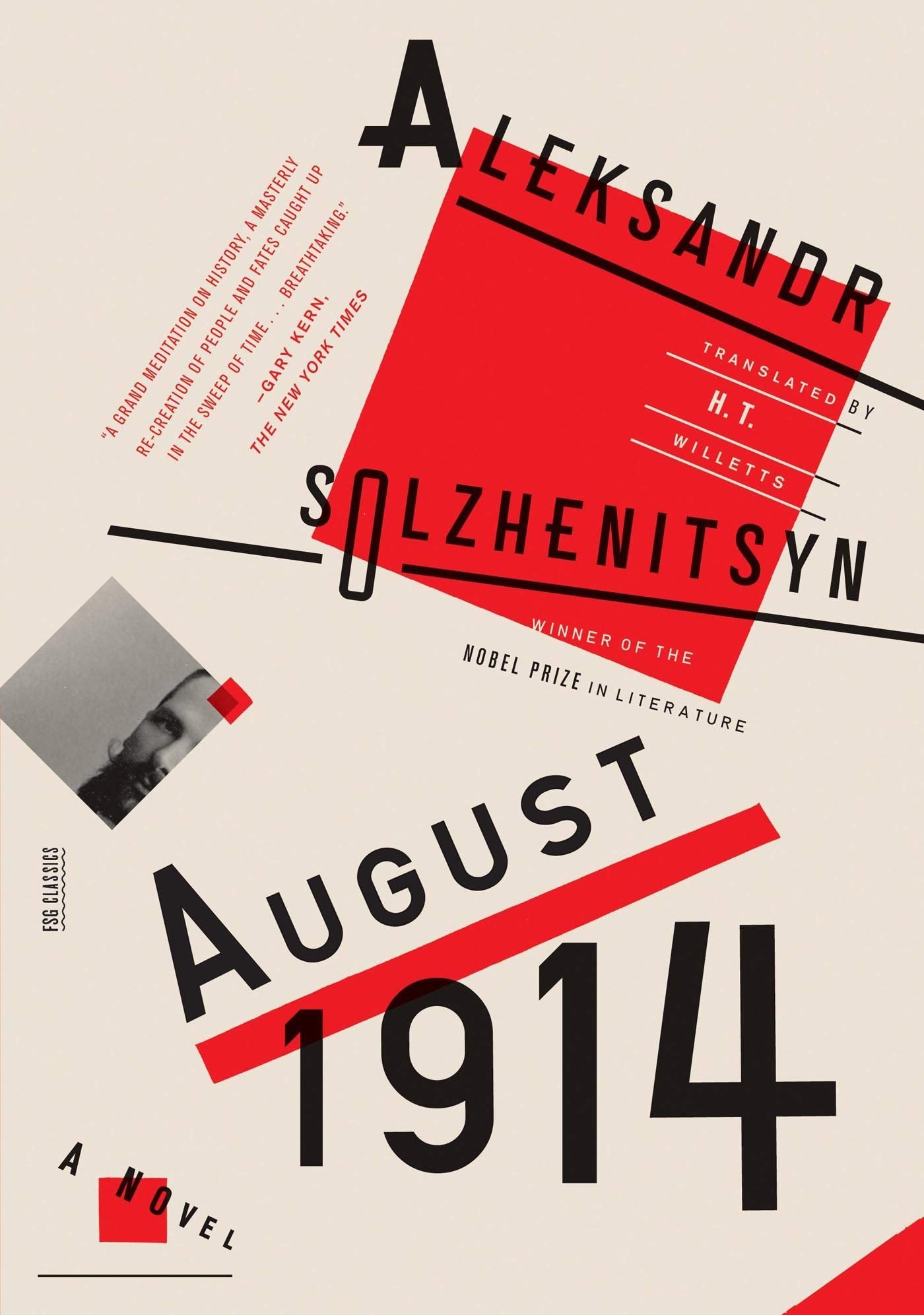
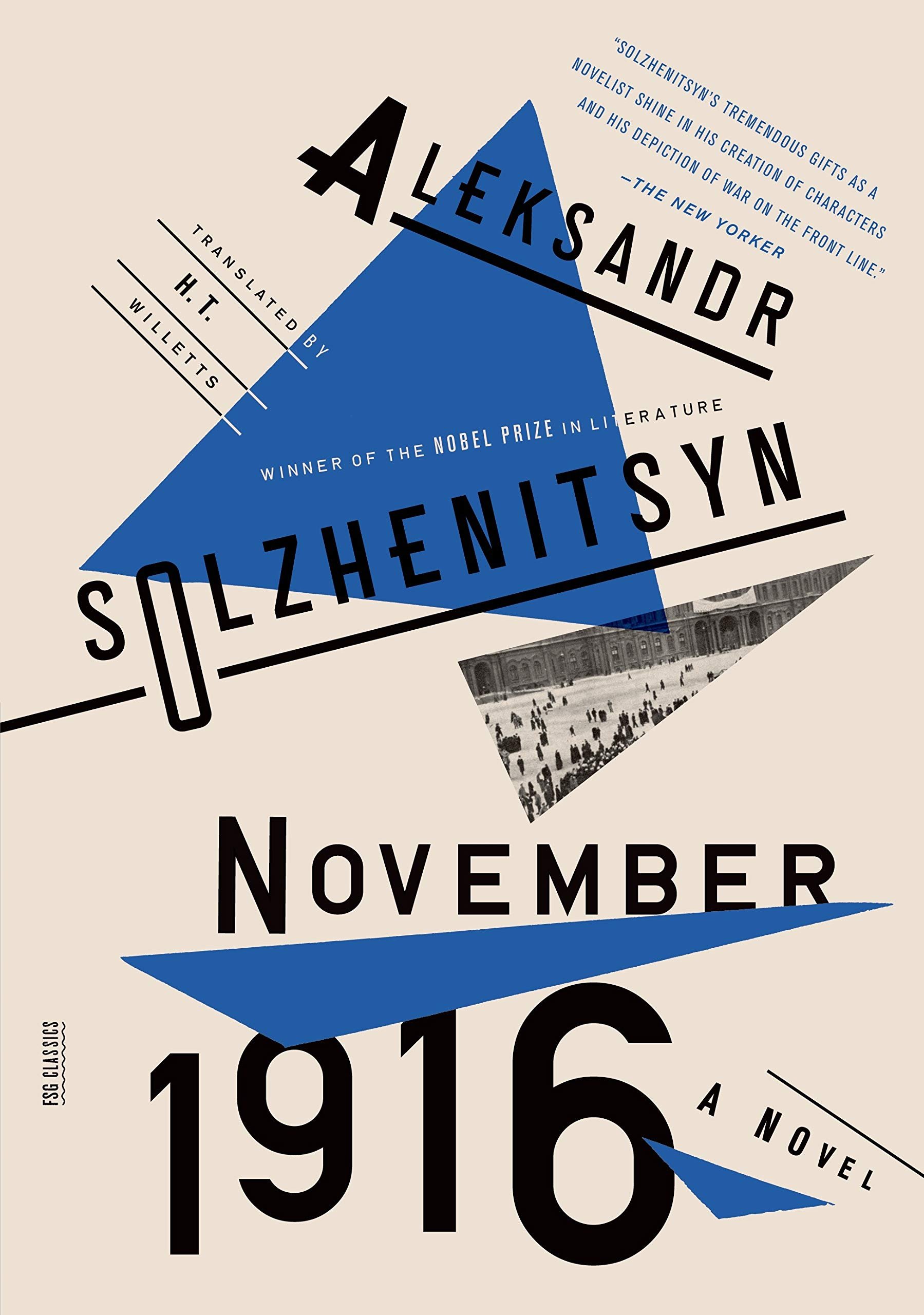
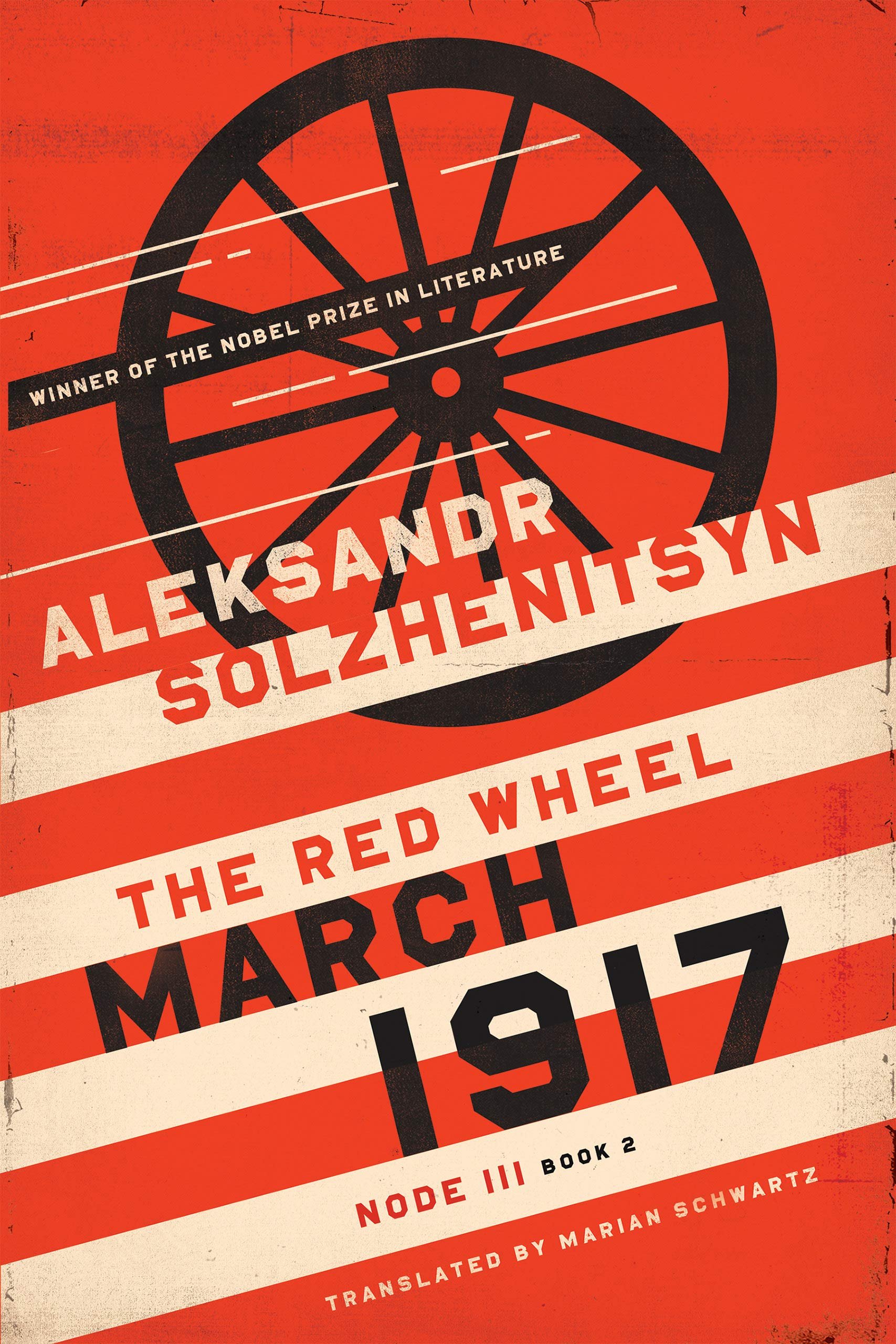
Progress in completing the publication of The Red Wheel—Solzhenitsyn’s epic of the Russian Revolution—is proceeding slowly but surely. Readers are reminded that there was an unfortunate, tremendous lull after the 1989 publication of Node I and the 1999 publication of Node II. Once a new translator (Marian Schwartz) and publisher (University of Notre Dame Press) took on the task to bring out the remainder of the book in English, a new book of Node III (March 1917, itself consisting of four books) has come out every other autumn since 2017, i.e. in 2017, 2019, 2021. Book 4 is slated for October 2024, completing Node III, and thereafter the two books of Node IV (April 1917) will follow in due course.

We remind Solzhenitsyn readers of the overall sequence of the 10-volume Red Wheel:

Happy 104th birthday, Aleksandr Solzhenitsyn!

On the great writer’s 104th birthday, we share with you one of his inimitable Miniatures (aka prose poems), tiny masterpieces that pack so much into so little. Here is “Sharik”:

A boy in our yard keeps a little dog called Sharik on a chain. They tied him up when he was just a puppy.

One day I took him some chicken bones while they were warm and smelt good. But the boy had just let the poor creature off his chain for a run. The snow in the yard lay thick and fluffy. Sharik bounded about like a hare, on his back legs one minute and his front legs the next, rushing from corner to corner of the yard and back again, with snow on his muzzle.

He ran to me, the shaggy creature, and jumped all over me, sniffed the bones—and off he went again, up to his belly in snow.

“I don’t want your bones,” he seemed to say, “just give me my freedom. . . .”
— Aleksandr Solzhenitsyn, Sharik

Ivan Denisovich "in a nutshell"

Solzhenitsyn biographer Joseph Pearce has posted a piece on One Day in the Life of Ivan Denisovich as part of his Great Literature in a Nutshell series.

As the title suggests, the whole action of the novel takes place on one solitary day in the life of the protagonist. In this way, Solzhenitsyn takes the reader into the claustrophobically monotonous life of the prisoners, who follow the same routine day in, day out, with no seeming end in sight. We experience not merely the claustrophobic monotony but the chilling physical intensity of the experience.
— Joseph Pearce

Aza Alibekovna Takho-Godi Awarded Solzhenitsyn Literature Prize

The 2022 Aleksandr Solzhenitsyn Prize in Literature has been awarded to legendary philologist Aza Alibekovna Takho-Godi, who has just celebrated her 100th (!) birthday. Natalia Solzhenitsyn, who announced the prize in Moscow on behalf of the jury, remarked that “like for Plato, your work became more than a virtuous habit, but your very life”.

PUBLISHED TODAY: March 1917, Book 2 re-issued in paperback

Book 2 of March 1917, first published in English by Notre Dame Press three years ago, has been released today in paperback. See a short video introducing the book here. To catch up on The Red Wheel from the beginning, read August 1914, October 1916, Book 1 of March 1917, then this Book 2 of March 1917. Book 3 is here, and Book 4 is due out in autumn 2024.


Remembering Mike Nicholson

Michael A. (“Mike”) Nicholson

1943–2022

We mourn the sudden death last Friday of our dear friend and colleague, Mike Nicholson. Dr. Michael A. Nicholson was Tutorial fellow in Russian at University College, Oxford, from 1987 to 2011 and one of the world’s leading experts on Solzhenitsyn. Mike was possessed of a sparkling, vivacious wit, jolly good humor, but also quite capable of biting sarcasm (when called for). A great and important scholar of Solzhenitsyn, and a lover of truth. Each of us enjoyed his company immensely on those happy occasions when we could be together with him.

We have compiled a partial list of Mike’s work on Solzhenitsyn:

Tributes to Mike are here and here. Tomorrow’s funeral service will take place in the College Chapel, Oxford, at 2 o’clock p.m. and can also be livestreamed here.

Rest in peace, gentle friend.

Thinking About Love of Country

David Deavel, editor of Solzhenitsyn and American Culture, has a thoughtful reflection here on the nature of real patriotism. (The piece first appeared in print in February 2022, but is now available online.)

As Solzhenitsyn observed, dismissals of patriotism can be purely class-based. But sometimes, as in Schmemann’s case, they are motivated by the fear that passionate love of a nation will inevitably lead to putting love of country over moral principles. Solzhenitsyn’s patriotism has nothing to do with this attitude, often called “jingoism” but which he calls “almost. . .a cousin of ‘fascism.’” He defined “patriotism” as “an integral and persistent feeling of love for one’s homeland, with a willingness to make sacrifices for her to share her troubles, but not to serve her unquestioningly, not to support her unjust claims, rather to frankly assess her faults, her transgressions, and to repent for these.”

Loving a country involves sharing in its shame, in some sense in its guilt (Swiss scholar Georges Nivat rightly called Solzhenitsyn’s an “anguished love of country”), and acting to help one’s own nation repent from its collective wickedness. It does not mean, as Solzhenitsyn said, that we ought “to scrape all the guilt from mother earth and load it onto ourselves.” As Daniel J. Mahoney put it, Solzhenitsyn “insisted that contrition should not be confused with masochistic self-hatred.”
— David Deavel

Whittaker Chambers and Solzhenitsyn

In a probing new piece over at American Mind, our own Daniel J. Mahoney pays tribute to Whittaker Chambers on the 70th anniversary of the publication of his extraordinary memoir, Witness. Chambers, who “did not return from Hell with empty hands,” in André Malraux’s memorable formulation, shared with Solzhenitsyn a dim view of man’s ability to orient himself morally if “blind to the things of the spirit.”

Solzhenitsyn never attacked reason—not for a moment—but rather criticized an “anthropocentric humanism” that mistook human beings for gods and denied God’s saving presence in the human world. Václav Havel made much of the same argument in his well-received essays and speeches from the 1970s through the 1990s. But in Chambers’ and Solzhenitsyn’s cases their moderate and humane messages, alert to the evil that lurks in men’s hearts and in ideologies that attack both God and man, were willfully and mendaciously confused by our cultural elites with moral fanaticism. That effort in elite circles to in essence silence or cancel both Chambers and Solzhenitsyn is worthy of much reflection. It reveals the woke spirit avant la lettre.
— Daniel J. Mahoney

A video companion to the Gulag Archipelago

A young lady, Desi-Rae Campbell, writes us:

“I want to share this video series that I did covering The Gulag Archipelago. Although reading the book is the best way to absorb the content, it is useful for people who both have and do not want to read the book or can't for various reasons. It also includes relevant imagery and footage. Here is the full playlist” below. We thought it worth sharing with readers of that epic work.

What Solzhenitsyn Understood

Aleksandr Solzhenitsyn; illustration by Seth

The eminent New York Review of Books features a major piece, in its current issue, by the always-insightful Gary Saul Morson, a splendid reflection on the Red Wheel and the misunderstandings that proliferated around Solzhenitsyn during his Western exile—the years of Between Two Millstones.

Read the full piece here.

Despite its relentless focus on political events, The Red Wheel paradoxically instructs that politics is not the most important thing in life. To the contrary, the main cause of political horror is the overvaluing of politics itself. It is supremely dangerous to presume that if only the right social system could be established, life’s fundamental problems would be resolved. Like the great realist novelists of the nineteenth century, Solzhenitsyn believed that, as he stated in Rebuilding Russia,

political activity is by no means the principal mode of human life…. The more energetic the political activity in a country, the greater is the loss to spiritual life. Politics must not swallow up all of a people’s spiritual and creative energies. Beyond upholding its rights, mankind must defend its soul.
— Quote Source

Solzhenitsyn Was Right

An interesting reflection by Rabbi Jeremy Rosen over at J-Wire on Solzhenitsyn and his legacy.

He strongly objected to the mischaracterization of his views by the same western intellectual and journalistic circles that had previously praised his courage in criticizing the USSR. But turned against him when he began to dismiss the vapid, armchair intellectual hypocrisy of Western societies which failed to offer viable moral alternatives. He felt alienated by the disregard and rejection of a serious spiritual dimension in American life. He spoke out against the way most of the media in the West, distorted facts just as much as the Soviet censors had and still do.
— Rabbi Jeremy Rosen