"Why I’m Leaving Mumford & Sons"

Winston Marshall photo.jpg

A couple of days ago a fascinating open letter was posted by a musician, Winston Marshall, leaving a world-famous band (Mumford and Sons) not out of fearful deference to a censorious Twitter mob, but out of fidelity to conscience and his own moral integrity.  And the role of Solzhenitsyn in informing his decision is striking—and encouraging. In his open letter, Mr Marshall quotes Solzhenitsyn twice to great effect, especially the remarkable peroration of “Live Not by Lies!”

“So why leave the band?
On the eve of his leaving to the West, Solzhenitsyn published an essay titled ‘Live Not By Lies’. I have read it many times now since the incident at the start of March. It still profoundly stirs me.

“And he who is not sufficiently courageous to defend his soul — don’t let him be proud of his ‘progressive’ views, and don’t let him boast that he is an academician or a people’s artist, a distinguished figure or a general. Let him say to himself: I am a part of the herd and a coward. It’s all the same to me as long as I’m fed and kept warm.”

For me to speak about what I’ve learnt to be such a controversial issue will inevitably bring my bandmates more trouble. My love, loyalty and accountability to them cannot permit that. I could remain and continue to self-censor but it will erode my sense of integrity. Gnaw my conscience. I’ve already felt that beginning.
The only way forward for me is to leave the band. I hope in distancing myself from them I am able to speak my mind without them suffering the consequences. I leave with love in my heart and I wish those three boys nothing but the best. I have no doubt that their stars will shine long into the future. I will continue my work with Hong Kong Link Up and I look forward to new creative projects as well as speaking and writing on a variety of issues, challenging as they may be.”
— Winston Marshall

Nobel archives reveal judges’ safety fears for Solzhenitsyn

Guardian.png
“Newly opened archives at the Swedish Academy have revealed the depth of concern among Nobel judges for the consequences awaiting Aleksandr Solzhenitsyn if the dissident Soviet writer were awarded the prize for literature in 1970.

The author of One Day in the Life of Ivan Denisovich, who revealed the horrors of Stalin’s gulags in his writings and was eventually exiled by the Soviet Union, was named the Nobel laureate that year, lauded by the committee for “the ethical force with which he has pursued the indispensable traditions of Russian literature”.

But archives at the Swedish Academy, which are sealed for 50 years after each laureate is named, have revealed the fierce debate among the judges over what a win might mean for Solzhenitsyn.”

[Read on at the Guardian website]

New Exhibit Marks 50th anniversary of Solzhenitsyn's Nobel Prize

Moscow’s House of Russian Culture Abroad has opened a new exhibit, “Word of Truth”, marking the 50th anniversary (1970-2020) of Solzhenitsyn being awarded the Nobel Prize in Literature. The opening of the exhibit had been delayed on account of the coronavirus pandemic. Here is a news item from Russian TV about the opening.

Live Not by Lies

10.11┆  “The man who is for the moment the most famous person in the western world” (C. Ogden) [=7.5].jpg

On this New Year’s Day, we are pleased to present to our readers the complete text of Solzhenitsyn’s seminal 1974 essay, Live Not by Lies, in the definitive translation by Yermolai Solzhenitsyn, also found in the Solzhenitsyn Reader. Live Not by Lies—a worthy resolution for this, or any other, New Year.

“Yes, at first it will not be fair. Someone will have to temporarily lose his job. For the young who seek to live by truth, this will at first severely complicate life, for their tests and quizzes, too, are stuffed with lies, and so choices will have to be made. But there is no loophole left for anyone who seeks to be honest: Not even for a day, not even in the safest technical occupations can he avoid even a single one of the listed choices—to be made in favor of either truth or lies, in favor of spiritual independence or spiritual servility. And as for him who lacks the courage to defend even his own soul: Let him not brag of his progressive views, boast of his status as an academician or a recognized artist, a distinguished citizen or general. Let him say to himself plainly: I am cattle, I am a coward, I seek only warmth and to eat my fill.”

Short Video Introducing Book 2 of Between Two Millstones

Learn more about the forthcoming English publication of BETWEEN TWO MILLSTONES, Book 2: Exile in America.

This long-awaited first English translation of Nobel prize-winner Aleksandr Solzhenitsyn's "Between Two Millstones, Book 2," will be available on November 15...

Russia and the USSR: Solzhenitsyn Knew the Difference

Wall Street Journal.png

In an op-ed in today’s Wall Street Journal, Solzhenitsyn’s son, the conductor Ignat Solzhenitsyn, examines the “historical roots of Russian-Western mistrust” through the lens of his father’s ruminations on these questions, especially in the crucial Chapter 6, “Russian Pain”, which opens the forthcoming Book 2 of Between Two Millstones.

“After the fall of communism, Solzhenitsyn’s call for repentance, for a historical reckoning on the model of Germany’s post-Nazi Vergangenheitsbewältigung, went unheeded. And so official government support for memorials of communist repression and the incorporation of “The Gulag Archipelago” into high-school curricula paradoxically coexists in some quarters today with a noxious strain of thought that Joseph Stalin —the chief butcher of Russians—was a Russian patriot, while Solzhenitsyn—the chief enemy of Russia’s oppressors—was a traitor.

No wonder, then, that the West has blurred any meaningful distinction between the totalitarian jackboot of the U.S.S.R. and the soft authoritarianism of a comparatively free Russia, and confused “Russian” and “Soviet,” misunderstanding three centuries of Russian history and the antinational essence of communism. “ ‘Russian’ is to ‘Soviet’ as ‘man’ is to ‘disease,’ ” wrote Solzhenitsyn. An unintended consequence: the unprecedented Russian consensus of liberal society and illiberal government, who agree on little, except that the West won’t like Russia no matter what she does.

If Western policy makers’ objective remains to bring Russia into the community of free nations, they might heed Solzhenitsyn’s plea and engage with Russia equitably, according to the virtues or failings of current policy, rather than judge her reflexively by a fictitious, maleficent historical narrative that bars any path forward.”

New Solzhenitsyn Mural in Tver

The new mural, at 29, Radishchev Boulevard in Tver.

The new mural, at 29, Radishchev Boulevard in Tver.

In the city of Tver, about 100 miles northwest of Moscow, street painter Viktor Lebedev adorned the side wall of an apartment building at 32, Smolensky Lane with a large mural on the occasion of Solzhenitsyn’s 100th anniversary in 2018.  Next to the author’s portrait were the words: “Live Not by Lies. A.I. Solzhenitsyn”.

The mural immediately caused division, with some angry voices decrying Solzhenitsyn as a traitor who helped destroy the USSR.  One of those opposed is a building resident, and he filed a complaint to stop the mural, since a municipal permit had not been granted.  As the case wound its way through the legal system, Communist activists painted over the “not” (thus: “Live by Lies.”). On 4 July 2020, they painted over the mural entirely.

On 11 July 2020, at the behest of the governor of Tver oblast, Igor Rudenya, it was announced that another location had been found; that the artist, Viktor Lebedev, had agreed to put the work up again; and that the new mural at 29, Radishchev Boulevard, “has already become a notable spot, frequently photographed by passersby.”

It appears that the Communist activists have become the latest victims of the age-old rule, “Be careful what you wish for.”

Read a machine translation of the story here.

The old mural,  at 32, Smolensky Lane in Tver.

The old mural, at 32, Smolensky Lane in Tver.


Solzhenitsyn "Quote" on Police a Fake

We have learned that a meme is making the rounds concerning an alleged quote about attacks against police, purportedly from Solzhenitsyn’s Two Hundred Years Together.  (That book has not yet appeared in English, except in illegal, pirated, unauthorized, tendentious hatchet jobs in dark corners of the web. Learn more here.) We have checked the original Russian and do not find anything resembling this quote. In any case, we object to thoughtlessly enlisting a great writer to score political points on burning issues of the moment.

AIS police fake 2020.06.07.png

Ivan Denisovich and COVID-19

One Day Willetts cover.jpg

Over at the Cavendish Historical Society, Margo Caulfield has a fresh take on One Day in the Life of Ivan Denisovich, suggesting it can be seen as a precursor to the emerging field of positive psychology and the modern understanding of “mindfulness”.

“As it turns out, a very successful and highly practiced form of psychotherapy, cognitive behavioral therapy (CBT), has its roots in Stoic philosophy. Since one of the most famous Stoics was Epictetus, who was born into slavery, it’s not surprising that Solzhenitsyn would have drawn some similar conclusions. We may not have control over our circumstances, but we can control how we interpret them and how we respond to them.

In the midst of our “stay-at-home” order, “One Day in the Life” is definitely worth a read. It’s short, can be read in one sitting, and can help reframe this time of Covid-19 by reminding us that we do have control over how we respond as well as that there are positive things happening all around us that we can be grateful for.”
— Margo Caulfield

Mikhailova and Nekrasov Awarded 2020 Solzhenitsyn Literature Prize

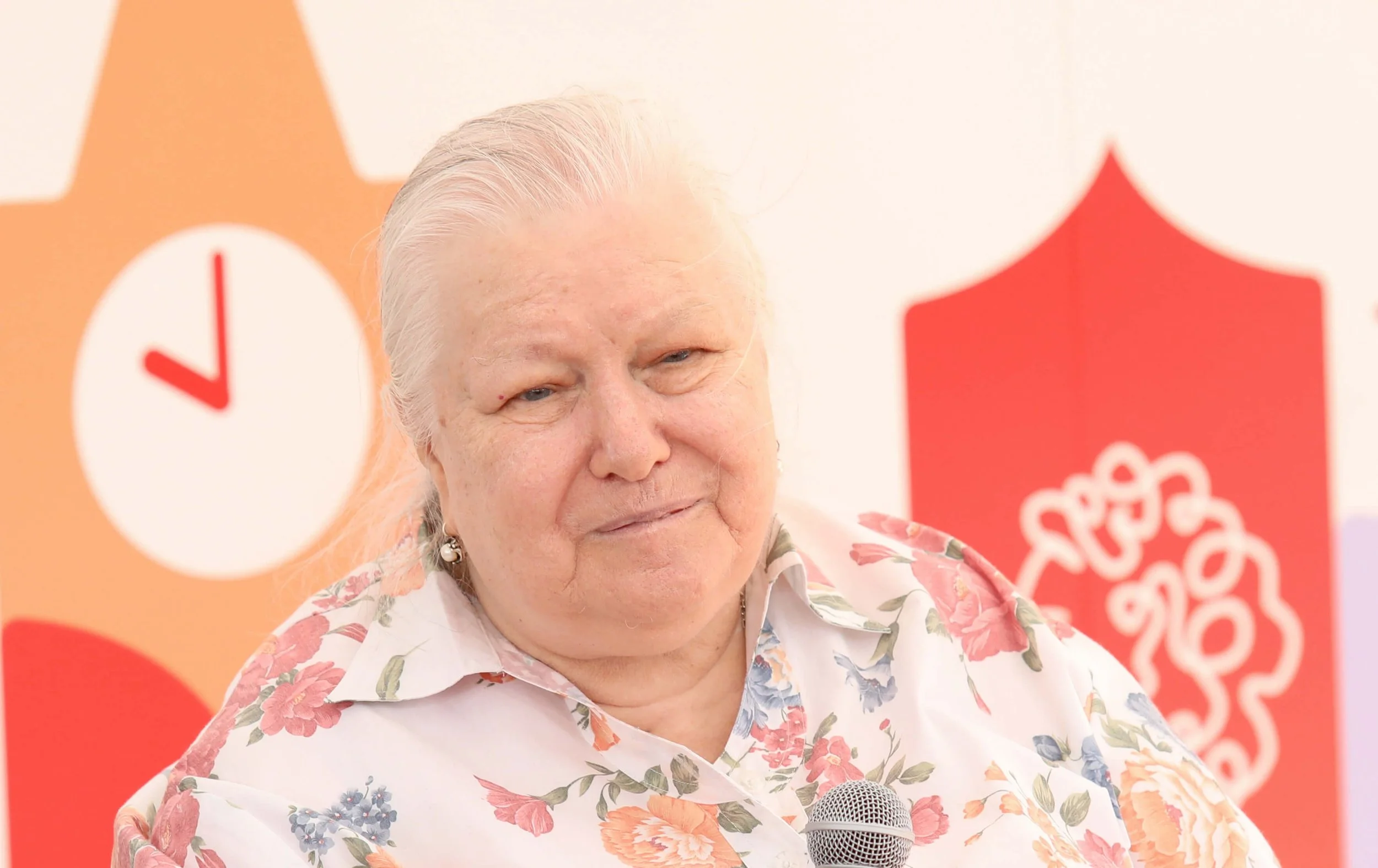
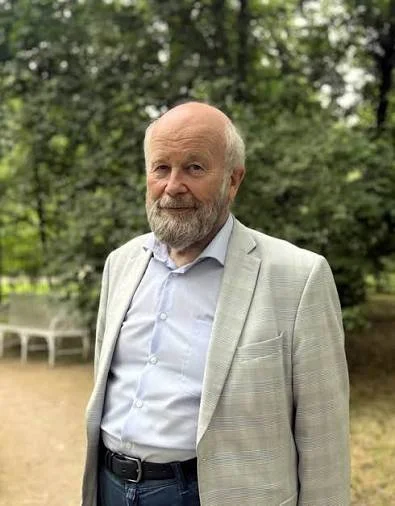
The 2020 Aleksandr Solzhenitsyn Prize in Literature has been awarded to museum directors Natalia Mikhailova—“for inspired service to the genius of Russian poetry, Alexander Sergeyevich Pushkin; and for the creation of the Vasili Lvovich Pushkin Museum”—and to Sergei Nekrasov, “for many years of dedicated service to the cause of Russian culture; and for the creation of the Gavriil Romanovich Derzhavin Museum.”

natalia mikhailova

sergei nekrasov

New Richard Tempest book on Solzhenitsyn

image.png

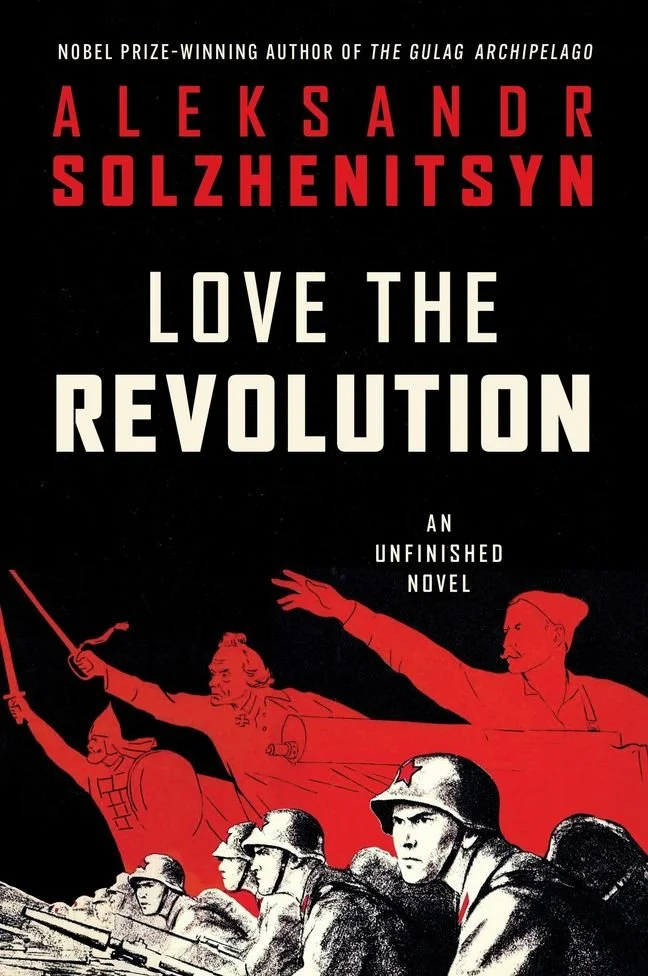
Solzhenitsyn scholar Richard Tempest has just published Overwriting Chaos: Aleksandr Solzhenitsyn's Fictive Worlds (Boston: Academic Studies Press, 2019), a welcome new study examining Aleksandr Solzhenitsyn’s evolution as a literary artist from his early autobiographical novel Love the Revolution to the experimental mega-saga The Red Wheel, and beyond. Tempest shows how this author gives his characters a presence so textured that we can readily imagine them as figures of flesh and blood and thought and feeling. The study discusses Solzhenitsyn’s treatment of Lenin, Stalin, and the Russian Revolution; surprising predilection for textual puzzles and games à la Nabokov or even Borges; exploration of erotic themes; and his polemical interactions with Russian and Western modernism. Also included is new information about the writer’s life and art provided by his family, as well as Tempest’s interviews with him in 2003-7.

Mr. Tempest’s book is available directly from the publisher, in hardcover or e-book from Amazon, or wherever books are sold.

Table of Contents

Acknowledgments
A Note on Translations and Transliterations
Preface
Timeline of Solzhenitsyn’s Life and Works

Part One: The Writer In Situ

1. The Quilted Jerkin: Solzhenitsyn’s Life and Art
2. Ice, Squared: “One Day in the Life of Ivan Denisovich”
3. “Turgenev Never Knew”: The Shorter Fictions of the 1950s and 1960s
4. Meteor Man: Love the Revolution
5. Helots and Heroes: In the First Circle
6. Rebel versus Rabble: Cancer Ward

Part Two: The Writer Ex Situ

7. Twilight of All the Russias: The Red Wheel
8. Return: The Shorter Fictions of the 1990s
9: Modernist?

Appendix. Three Interviews with Aleksandr Solzhenitsyn (2003–7)

Notes
Selected Bibliography
Index

On Solzhenitsyn's 101st birthday: never-published-before autobiography

Screen Shot 2019-12-30 at 15.10.47.png

Today, on 11 December 2019, Aleksandr Solzhenitsyn’s 101st birthday, Rossiskaya Gazeta [Russian-language] publishes an excerpt from Chapter 2, “School”, of Solzhenitsyn’s never-published-before autobiography. Chapter 1 appeared last year in Studying Solzhenitsyn, vol. 6, while this Chapter 2 will appear in full in the forthcoming vol. 7.

Solzhenitsyn books on Christmas list

Screen Shot 2019-01-22 at 22.21.45.png
“Magisterial depiction of the long, slow collapse of the Tsarist regime in which everybody gets a voice, but nobody feels that he or she can prevent the worst of it. Eerily prescient for the binary confusions of the present. The main character is Petrograd itself.”
— Nathan Harter, recommending March 1917, Book 2

Natalia Solzhenitsyn interview with Le Figaro

Screen Shot 2019-12-28 at 22.05.37.png

Natalia Solzhenitsyn, the writer’s widow, has given a wide-ranging interview to Le Figaro (subscription required) on the 30th anniversary of the fall of the Berlin Wall. She addresses questions about historical memory, justice, and possible paths forward for Russia and the West. Here is one exchange:

“- On his return, Aleksandr Solzhenitsyn wanted to face the past, to open the archives. Why?

- He wanted to inform the younger generations, because he knew that otherwise they would forget as the witnesses disappeared. Fortunately, many people in Russia today are trying to erect monuments to the victims of repression in the provinces. Some suffer as the historian Yuri Dmitriev in Karelia, who finds himself in prison for his fight. I speak a lot publicly to support it. In his case, it was the local FSB intelligence services that sued him in court [on false accusations—editor’s note] because they were furious that the memorial he defends has become a highly frequented place of pilgrimage, with 20,000 people who go there every year. And the top-level FSB does nothing, not wanting to go against its own structures.”
— Natalia Solzhenitsyn

Five Best Books on the Great Terror

Screen Shot 2019-12-28 at 19.31.32.png
“How is it possible to put two strangers in a room—one an executioner, the other a prisoner—and not only persuade one to kill the other but convince both that this murder serves some higher purpose? During his eight years in the Gulag, Alexander Solzhenitsyn felt the full brunt of Stalin’s police state “on his own hide,” in the Russian phrase. His epic “Gulag Archipelago,” a “literary investigation” of the history of Stalin’s terror, is the most thoroughly researched, deeply felt work ever written on the subject. Yet in all its exhausting and exhaustive detail, from the exact dimensions of the tiny, blacked-out holding cages to the horrors of being transported across the 10 time zones of the U.S.S.R. to frozen hellholes in the Arctic, the central question remains: “Where did this wolf-tribe appear from among our own people?” Solzhenitsyn asks of the hundreds of thousands of ordinary, decent Soviet men and women who were ready to justify and even participate in the massacre of their fellows. “Does it really stem from our own roots? Our own blood? It is ours.” Solzhenitsyn’s explanation is that “the line dividing good from evil cuts through the heart of every human being. And who is willing to destroy a piece of their own heart?” That has the ring of truth. Still it does not explain, as perhaps nothing can, the enormity of the mass delusion that was Stalinism—one that claimed up to 15 million lives through execution, man-made famine and forced labor.”
— Owen Matthews

Putin congratulates Natalia Solzhenitsyna on her 80th birthday

Yesterday Russian president Vladimir Putin sent a congratulatory message to Natalia Solzhenitsyna, the author’s widow, on the occasion of her 80th birthday. The message reads, in part:

“You have devoted your life, energy, and creative gift to promoting charity and enlightenment; you stood at the origins of important educational and humanitarian projects, such as the Museum of Russia Abroad, which has become the centre for preserving a huge stratum of Russian history and culture, as related to the émigré community, its lifestyles and traditions.

Aleksandr Solzhenitsyn’s works are an integral and very important part of Russia’s cultural heritage. You were and still are this great writer’s soulmate as well as closest comrade-in-arms; you are doing a lot to preserve his works and ideas and are handing down to posterity the memory about this outstanding and unique man, about his role in asserting the principles of justice and democracy in this country.”
— President Vladimir Putin

And here is one of several pieces on Russian TV marking Natalia Solzhenitsyn’s 80th birthday: