"The Unpublished Solzhenitsyn" in LePoint
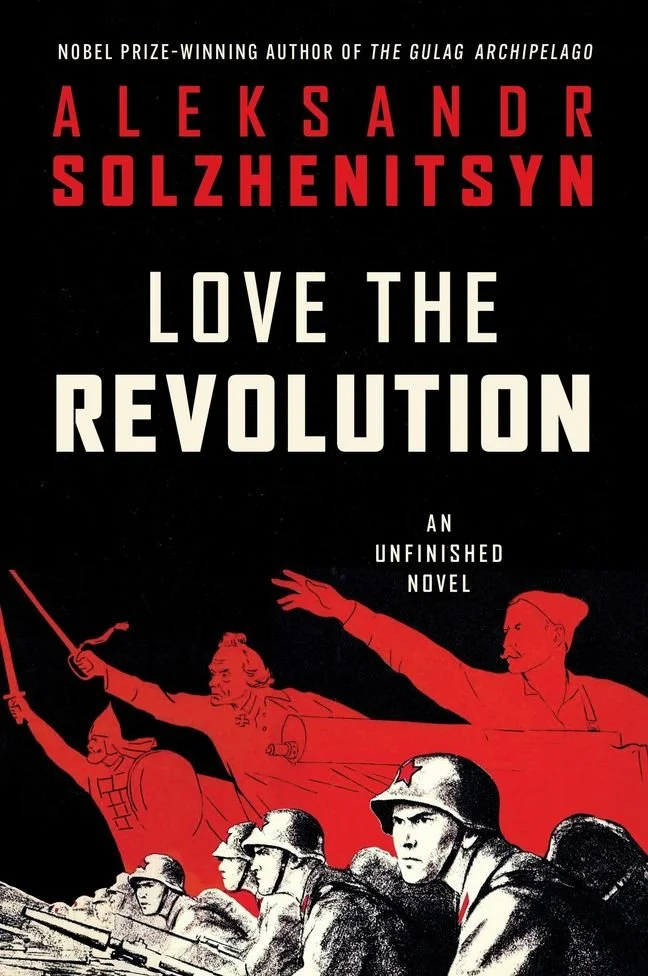
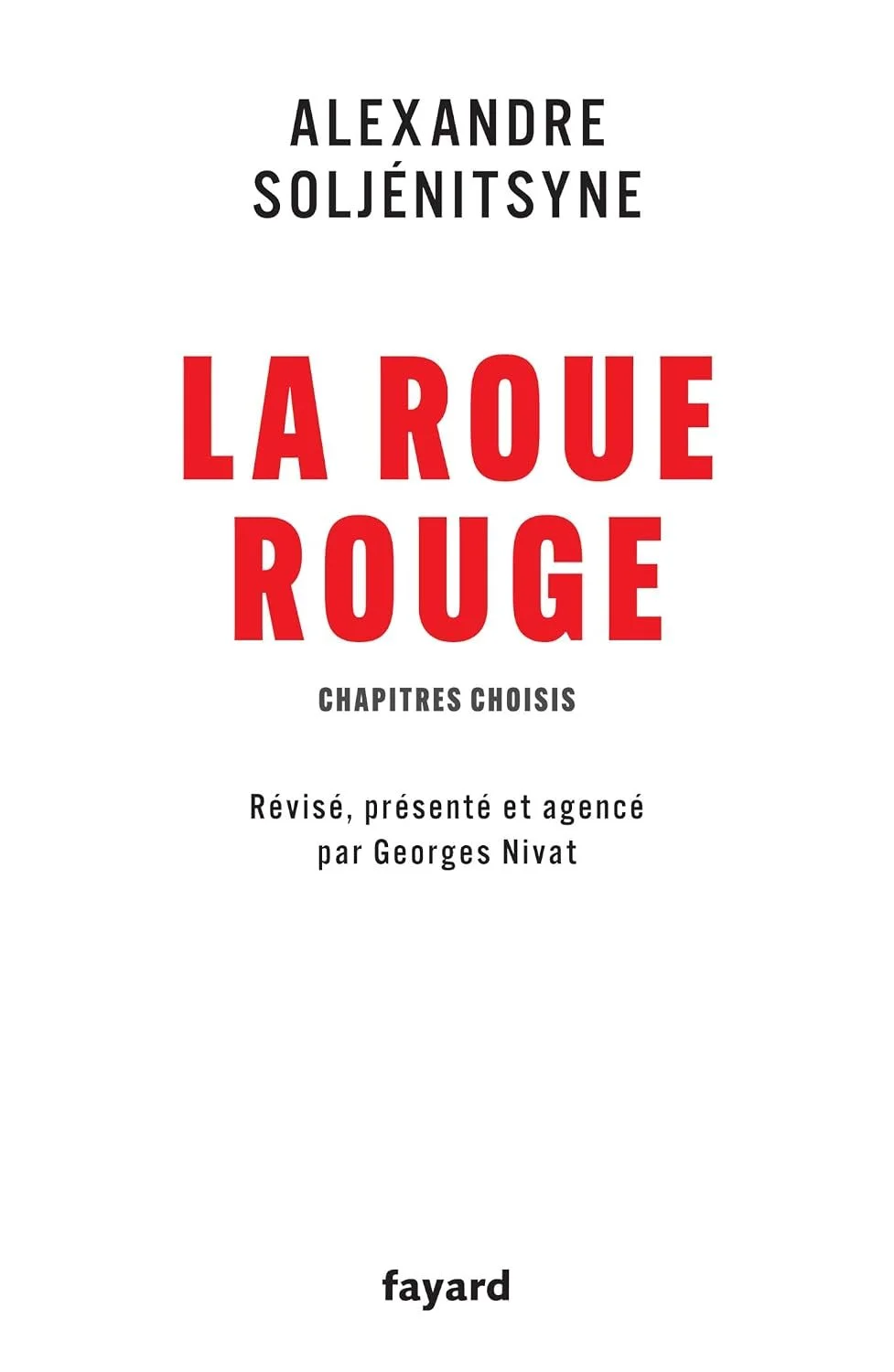
/The current issue of the French weekly LePoint has excerpts from two new Solzhenitsyn titles forthcoming next week from Fayard.

The current issue of the French weekly LePoint has excerpts from two new Solzhenitsyn titles forthcoming next week from Fayard.

“Warning to the West”, a collection of Solzhenitsyn’s speeches to the Americans and the British in 1975 and 1976, is newly available from Vintage Digital, both on Amazon (UK) and iTunes (UK).
“During 1975 and 1976, Nobel Prize-winner Aleksandr Solzhenitsyn embarked on a series of speeches across America and Britain that would shock and scandalise both countries. His message: the West was veering towards moral and spiritual bankruptcy, and with it the world’s one hope against tyranny and totalitarianism.
From Solzhenitsyn’s warnings about the allure of communism, to his rebuke that the West should not abandon its age-old concepts of ‘good’ and ‘evil’, the speeches collected in Warning to the West provide insight into Solzhenitsyn’s uncompromising moral vision. Read today, their message remains as powerfully urgent as when Solzhenitsyn first delivered them.”

Elena Strokanova in Russkiy Mir recaps proceedings at the recently-concluded conference.

Kevin O’Connor at VTDigger details Vermont initiatives to celebrate the Solzhenitsyn centenary.

The Landsgemeinde gathers to vote in Appenzell, Switzerland, in 2013. Photo: Rosmarie Widmer Gysel.
The September issue of New Criterion excerpts this remarkable passage from the forthcoming Between Two Millstones, Book 1, about the Swiss half-canton Appenzell, and its ancient voting rituals that Solzhenitsyn witnessed just before his first journey to North America in April 1975.

The September issue of Commentary excerpts the first few pages of Between Two Millstones, Book 1, forthcoming from Notre Dame in October. These pages, written in 1978, pick up where The Oak and the Calf leaves off, beginning with Solzhenitsyn’s expulsion to West Germany on February 13, 1974.

Over at Real Clear Politics, Daniel J. Mahoney writes perceptively about today’s Russia.
Matthew Janney at Culturetrip on Solzhenitsyn and objective truth.
“Friday, 3 August 2018 marks the 10th anniversary of Aleksandr Solzhenitsyn’s death. At a time when alternative facts and fake news are commonplace in public discourse, the Russian writer’s commitment to objectivity is a refreshing reminder of the existence of truth.”

A reflection at the National Endowment for the Humanities about Solzhenitsyn’s years in Vermont.
Philippe Gélie writes about “Alexandre Soljenitsyne, le secret bien gardé du Vermont”.

At First Things, Robert P. George reflects on Solzhenitsyn’s moral message and intriguingly compares his Harvard and Templeton speeches with Abraham Lincoln’s 1863 Proclamation of a National Day of Prayer and Fasting.
“It has been 155 years since Lincoln wrote those words. And yet, it is as if he wrote them yesterday and directed them to us today. Yes, as a culture, as a people, we have forgotten God. That is reflected in our laws, in the edicts of our Supreme Court, in our public policies, in our news and entertainment media, in our schools and universities, in our economic and cultural institutions, on the streets of our cities, and even, alas, in many homes. We “have vainly imagined, in the deceitfulness of our hearts,” that our “blessings were produced by some superior wisdom and virtue of our own.” And, as a result, we find ourselves in the condition so accurately and brutally diagnosed by Solzhenitsyn.”
Over at the Federalist, Stella Morabito recapitulates key themes of Solzhenitsyn's Harvard address.
“The Harvard speech is a must-read for our times, a diagnosis of what ails us, whether or not you agree with all of it.”

At NRO, Matthew Spalding compares Solzhenitsyn's 1978 Harvard address with Hillary Clinton's recent address at Yale.
“Solzhenitsyn eschewed the traditional clichés and head pats for the students, delivering instead a stunning analysis of the East and West, one which took seriously Harvard’s celebrated motto of Veritas — Truth — to speak of the imminent danger the West faced in losing not only the Cold War but also its democratic soul.”

In 2018 — the centenary of Aleksandr Solzhenitsyn’s birth and the 40th anniversary of his prophetic Harvard commencement address — the University of Notre Dame will launch several initiatives connected to the work of this novelist, critic of Communism and 1970 Nobel laureate for literature. Through his writing on the system of forced labor camps in the Soviet Union, Solzhenitsyn brought worldwide awareness to the devastating core of totalitarianism.
The University’s plans include the acquisition and first English translations of Solzhenitsyn works, as well as major academic conferences and postdoctoral fellowships that will connect researchers from around the world to the manuscript and print collections held by the Hesburgh Libraries — which are among the most extensive holdings in the United States related to the life and work of Solzhenitsyn.
“Nobody lived a more powerful witness to the truth about the human person’s right to dignity, freedom and human flourishing than this great writer.”


At the American Conservative two days ago, Jeff Groom recapitulates the Harvard address and concludes that many of Solzhenitsyn's challenges to Western societies are yet to be met.
“Forty years after a ‘World Split Apart’, as Americans search for answers to our present state of dissatisfaction, our leaders and citizens would be wise to heed the central theme of Solzhenitsyn’s message:
’It is time, in the West, to defend not so much human rights as human obligations.’”
At Law and Liberty yesterday, Mark Judge reflects on the major themes of the Harvard address.
“In a lecture full of striking pronouncements, this warning about the nature and quality of statesmanship stands out. The signs of a “threatened or perishing society,” Solzhenitsyn said, were two: “a decline of the arts [and] a lack of great statesmen. Indeed, sometimes the warnings are quite explicit and concrete.””

Today marks exactly 40 years to the day that Aleksandr Solzhenitsyn delivered his famous Harvard address. In Chapter 4 of his memoirs of the West, Between Two Millstones—forthcoming in English this October—Solzhenitsyn reflects on the controversy spawned by his speech. Those reflections are excerpted in the new issue of National Review.
“Before my Harvard speech, I naïvely believed that I had found myself in a society where one can say what one thinks, without having to flatter that society. It turns out that democracy expects to be flattered. When I called out “Live not by lies!” in the Soviet Union, that was fair enough, but when I called out “Live not by lies!” in the United States, I was told to go take a hike.”

A recent post on Harvard Magazine online from author Wanda Urbanska, a member of the Harvard graduating class of 1978, and present at Solzhenitsyn's famous address on 8th June of that year.
“IF YOU THINK no one will remember your words next week, let alone next year, think again. In fact, try 40 years—as I was recently reminded when a startling invitation popped up in my LinkedIn account. It was in Cyrillic.”

Learn more about the forthcoming English publication of Between Two Millstones, Book 1—forthcoming in October 2018 from University of Notre Dame Press.
The Aleksandr Solzhenitsyn Center
ASC Blog
His Writings
His Life
Landmarks & Exhibits
Photo galleries
Video Library
Resources
Donate
Contact Us
The Aleksandr Solzhenitsyn Center supports explorations into the life and writings of the Nobel Laureate and Russian writer and historian Aleksandr Solzhenitsyn.