Brant’s Magnificent Night
/
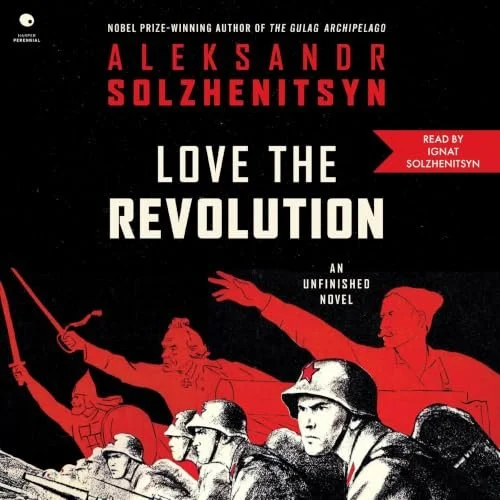
In advance of tomorrow’s publication of Love the Revolution, Solzhenitsyn’s early novel of wartime and coming of age—out tomorrow from HarperCollins—LitHub has published an excerpt from chapter 4.
In 1948, Aleksandr Solzhenitsyn, then twenty-nine and incarcerated in a Soviet facility—serving an eight-year sentence for having criticized Joseph Stalin in his private correspondence—began writing an autobiographical novel titled Love the Revolution. The novel, which was never completed, was published in Russia in 1999, and will come out in English for the first time next month from HarperCollins. The setting for this passage, adapted from the fourth chapter of the novel, is Durnovka village, January 1942—the first wartime winter after the Nazi invasion of the USSR. The autobiographical protagonist, Private Gleb Nerzhin—assigned to a horse-drawn convoy, but ever striving to achieve his coveted goal of joining the artillery—finally sees his fate begin to change, with the arrival in his platoon of Political Commissar Petrov and Junior Lieutenant Brant.
“The logic of the conversation, as envisaged by Brant, suggested that this was the point where Nerzhin should express gratitude.
But if they were going to the front?!
“David Isaevich! May I ask where the platoon is going?”
Brant gave a crooked smile that simultaneously expressed pity, sorrow, and doom:
“The platoon is going where the company is going. And the company is going where the battalion is going.”
“And the battalion?” Nerzhin made bold to ask directly—also in a whisper now—about this major military secret.
Brant made no effort to conceal it:
“To the Khopyor River. We’re going to build a new bridge that will secure communications during the spring floods.”
“Ah, so it’s not to the front . . .”
Brant drew himself up with dignity:
“This is more important than the front!”
“Will it be for long?”
Brant shrugged his shoulders:
“I’m a military man. How should I know?” He raised his voice, making it sound merciless: “I receive an order”—then, shifting his tone to one of austere self-sacrifice—“I say ‘aye-aye’. I’m a soldier, Nerzhin. When you’ll become a soldier, you’ll understand.”
Brant glanced at the reflection of his heroic pose on the dark panes of the shuttered window and added quietly:
“It’ll take three months or so.”
“And then you’ll return here?” Nerzhin himself didn’t notice that he’d said “you’ll return” rather than “we’ll return.”
Brant once again signaled ignorance by shrugging his shoulders: he was a soldier, after all.”